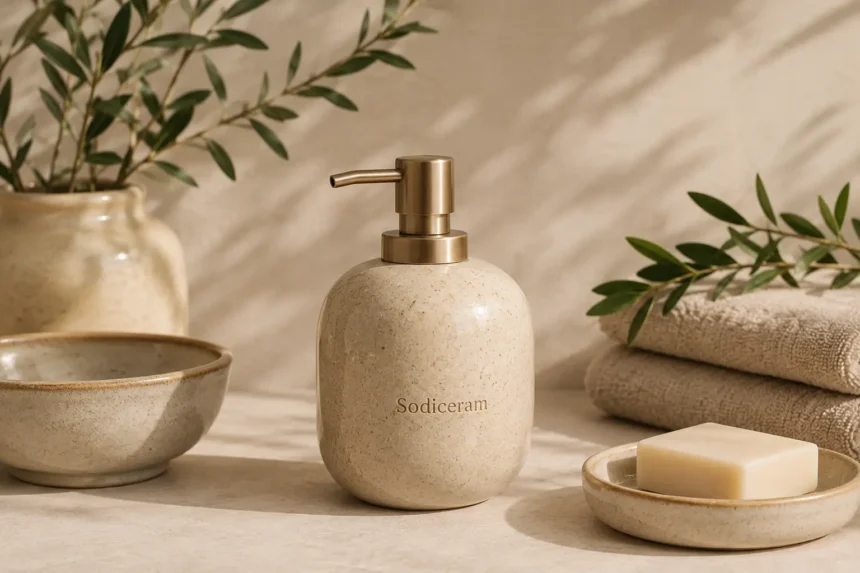
Sodiceram is an advanced ceramic material built from sodium-based compounds, premium clays, and mineral blends to deliver superior strength, thermal stability, and chemical resistance. Unlike standard tiles or conventional ceramics, it is purpose-built for demanding environments — both architectural and industrial. Its combination of durability, low maintenance, and design versatility has made it a growing choice for builders, designers, engineers, and manufacturers.
- What Is Sodiceram?
- The Science and Manufacturing Process Behind Sodiceram
- Key Features and Properties of Sodiceram
- Types of Sodiceram Surfaces
- Where Sodiceram Is Used — Real-World Applications
- Sodiceram vs Traditional Materials
- Benefits of Using Sodiceram
- Sodiceram Selection Guide and Best Practices
- Advantages and Limitations of Sodiceram
- Technical Specifications and Standards
- The Future of Sodiceram
- Conclusion
- FAQs
- What is Sodiceram, and what is it used for?
- How is Sodiceram different from traditional ceramic tiles?
- What are the main properties that make Sodiceram appealing?
- Where can Sodiceram be used?
- Is Sodiceram eco-friendly?
- Can Sodiceram handle extreme temperatures?
- What are the disadvantages or limitations of Sodiceram?
- Does Sodiceram require special maintenance?
What Is Sodiceram?
At its core, this material is a composite surface product. It begins with sodalite and ceramic compounds bonded through a controlled manufacturing process, producing something denser and more structurally stable than ordinary ceramic products.
Traditional ceramics are widely used for tiles and decorative finishes, but they have clear limits — they chip, absorb moisture, and degrade under chemical exposure. Sodiceram is built to overcome exactly those limits. It carries engineered properties that combine mechanical strength, low porosity, and corrosion resistance into a single cohesive product.
The term does not yet appear in major international technical standards as a fixed scientific classification. Across construction, manufacturing, and material science industries, however, it consistently refers to sodium-enhanced ceramic compositions designed for high-demand applications.
Key Characteristics of Sodiceram
| Property | Performance Level |
| Thermal resistance | Very High |
| Mechanical strength | Very High |
| Chemical stability | Superior |
| Corrosion resistance | High |
| Wear resistance | High |
| Water resistance | High |
| Stain resistance | High |
| Electrical insulation | Good |
| Maintenance requirement | Low |
| Lifespan | Extended |
The Science and Manufacturing Process Behind Sodiceram
The Science Behind Sodiceram
Performance starts at the material composition level. Feldspar, quartz, sodium compounds, and premium clays form the base matrix. Each ingredient has a specific function — feldspar improves density, sodium compounds strengthen bonding stability, and clays provide workability during shaping.
What makes the final product exceptional is the synergy between these materials once combined and processed under controlled conditions. The microstructure formed during production determines how the finished surface handles heat, pressure, and chemical exposure. This outcome is not accidental — it results from deliberate fabrication techniques rooted in advanced ceramic engineering.
How Sodiceram Is Made
The production process follows a precise sequence:
- Raw material blending — Clays, feldspar, quartz, and mineral blends are measured and mixed in exact proportions to ensure batch consistency
- Molding and shaping — The blend is shaped using controlled molding techniques suited to the intended product form
- Drying — Moisture content is carefully reduced to prevent stress fractures before the material enters the kiln
- High-temperature firing and sintering — Kilns operate at ultra-high temperatures, bonding particles at a molecular level to create the density and stress resistance the material is known for
- Surface finishing — Digital printing, 3D texturing, glazing, and laser finishing apply patterns and tactile effects without weakening structural integrity
Every stage demands precision. A deviation in moisture content before firing — or a temperature inconsistency in the kiln — directly affects the final product’s durability and chemical stability.
Key Features and Properties of Sodiceram
Several qualities set this ceramic material apart from standard surface options:
Thermal performance: It stays thermally stable under high and fluctuating temperatures without bowing or cracking. Thermal shock resistance is especially important in outdoor applications and industrial environments where temperature changes happen rapidly.
Chemical and abrasion resistance: The non-absorbent surface prevents chemicals from penetrating the material. It resists corrosive agents, staining, and surface degradation — even in high-traffic conditions where lesser materials show wear quickly.
Mechanical strength: The sintered structure produces hardness comparable to — and often exceeding — natural stones. Surface wear and impact do not chip it easily.
Insulation properties: Ceramics in this performance category provide natural electrical insulation, making certain formulations relevant for electronic components and industrial systems.
Lightweight advantage: Despite its density and strength, the material is lighter than many natural stone alternatives. That difference simplifies installation and reduces structural load on the building frame.
UV radiation resistance: Outdoor-grade formulations maintain color and surface integrity under prolonged UV exposure, making them well-suited for facades, patios, and pool surrounds.
Types of Sodiceram Surfaces
Available surface types offer genuine flexibility across both design and functional requirements:
- Glazed finish — High shine, strong stain resistance, vivid color options for interior use
- Matte finish — Lower reflectivity, better at concealing fine surface marks, commonly preferred in contemporary interiors
- Textured finishes — Add grip and dimensional depth, particularly useful in wet areas like bathrooms and outdoor surfaces
- 3D textured surfaces — Used for accent walls and feature surfaces where visual dimension adds character
- Marble and stone-like surfaces — Replicate natural stone aesthetics while outperforming them in consistency and durability
- Wood grain and organic finishes — Deliver warmth and natural design without the upkeep that real wood demands
- Digitally printed patterns — Custom designs are embedded without compromising structural properties.
This range of surface options means the material adapts to minimalist, industrial, or decorative styles without requiring a switch to a different product category.
Where Sodiceram Is Used — Real-World Applications
Construction and Architecture
In the building industry, this ceramic covers flooring, wall surfaces, facades, and exterior cladding. Its longevity under weathering makes it a practical choice for public installations, backsplashes, and large-format architectural surfaces. Designers and urban planners favor it because it delivers a premium visual finish without the fragility of conventional tiles over time.
Commercial and Hospitality
Commercial kitchens and bathrooms demand surfaces that resist moisture, staining, and heavy foot traffic simultaneously. Hotels and restaurants use this material in high-contact areas where appearance and hygiene are equally important. The slip-resistance of textured variants also makes it a safe choice for wet floor environments.
Industrial and High-Tech Applications
This is where the engineering properties matter most. Key industrial uses include:
- Semiconductor manufacturing — Wafer-processing equipment must stay stable under reactive gases and repeated heat cycles. Ceramic components in this space help maintain clean, consistent environments.
- Aerospace and defense — Structural parts that face extreme heat, pressure changes, and rapid temperature variation during operation require materials that hold form.
- Power plants and thermal systems — Electronic components and thermal insulation systems benefit from high heat resistance and natural non-conductivity.
- Clean energy — Fuel cells, hydrogen systems, and advanced batteries require materials that perform under continuous thermal and chemical stress without degrading.
- Industrial flooring and labs — High-load environments and laboratory settings rely on chemically resistant, durable surfaces that do not react with processing agents.
Sodiceram vs Traditional Materials
| Feature | Sodiceram | Standard Ceramic Tile | Natural Stone | Porcelain / Sintered Stone |
| Durability | Very High | Moderate | High | High |
| Water Resistance | High | Moderate | Variable | High |
| Thermal Stability | Very High | Moderate | Variable | High |
| Chemical Resistance | Superior | Limited | Limited | Moderate |
| Design Flexibility | Extensive | Basic | Moderate | Moderate |
| Maintenance | Low | Medium | High | Low |
| Initial Investment | Higher | Lower | High | Medium–High |
The real advantage is not one property in isolation — it is the combination. Natural stone offers durability but requires sealing and ongoing maintenance. Porcelain performs well but lacks comparable chemical resistance and design range. Standard ceramic falls short across nearly every high-demand category. Few materials match this ceramic’s balance of performance, aesthetics, and low upkeep simultaneously.
Benefits of Using Sodiceram
Performance Benefits
Structural integrity holds under pressure, extreme temperatures, and sustained chemical exposure. There is no significant degradation under normal installation conditions over time. Heat does not cause warping or surface cracking the way it does with lower-grade ceramics. That consistency reduces how often surfaces need to be replaced.
Economic Benefits
Lower maintenance expenses across the product’s lifespan create real and measurable cost advantages. In industrial settings, equipment lifespan increases when high-performance ceramic components replace conventional materials. Downtime linked to surface failure or replacement drops significantly. The initial investment is higher, but production output improvements and reduced operational disruption tend to offset this within the medium term.
Environmental Benefits
Manufacturing incorporates recycled raw materials, reducing dependence on virgin resources. Energy-efficient kilns and emission reduction processes are already standard in modern production. Water recycling systems and closed-loop fabrication reduce waste at the facility level. The product’s extended lifespan supports sustainable construction goals directly — fewer replacements mean less material waste over the life of a building.
Sodiceram Selection Guide and Best Practices
How to Select the Right Sodiceram
Choosing the right formulation depends on application requirements, not aesthetics alone. Key factors to consider:
- Match the thermal resistance rating to the operating temperature range of the environment
- Select corrosion resistance grades based on the specific chemicals present in industrial machinery or processing spaces
- Assess structural support needs — high-load flooring has different requirements than wall cladding
- Consult technicians or follow manufacturer guidelines to confirm the correct formulation for heat damage prevention and wear resistance in the target application.
Installation and Maintenance
Installation follows a similar process to standard ceramic tile, but specific adhesives may be required based on surface weight and density. Surface preparation matters enormously — an uneven or poorly prepared substrate will undermine even the best material.
For ongoing maintenance:
- Use mild detergents for routine cleaning and avoid abrasive cleaners that dull the surface finish
- Non-porous surfaces require no sealing but benefit from periodic inspection of grout and joint integrity
- Professional installers should manage large-format or industrial installations to ensure precision finishing and correct alignment.
- Routine checks catch minor joint issues before they grow into more significant surface problems.
Advantages and Limitations of Sodiceram
Advantages
- Exceptional durability across residential, commercial, and industrial environments
- Moisture-resistant and slip-resistant surface options for wet and high-traffic spaces
- Sound insulation properties that benefit multi-level buildings and busy commercial floors
- Low maintenance demands across an extended service life
- Wide range of colors and finishes without any sacrifice in structural performance
- Lighter than natural stone, which reduces installation complexity and structural load
- Production methods aligned with green building standards
Limitations
- Higher upfront cost than standard tiles — budget-sensitive projects may find more affordable alternatives practical
- Brittle under certain tension forces, particularly when installed on an unstable or uneven substrate
- Specialized knowledge is required for industrial and large-format installations.
- Global adoption and regional product availability are still uneven — some formulations may not be accessible in all markets.
- Manufacturing complexity keeps production costs from falling sharply in the near term.
Technical Specifications and Standards
Products in this category are evaluated against several measurable benchmarks:
- Wear resistance — Tests surface degradation under repeated friction to confirm long-term durability
- Thermal shock resistance — Measures the ability to withstand rapid temperature change without cracking
- Breaking strength — Assesses structural load capacity for floor and wall applications
- Slip resistance testing — Required for safety compliance in public and commercial flooring
- Moisture absorption — Low absorption rates confirm suitability for wet or humid environments
Producers align with international bodies, including ISO and ANSI, to meet worldwide standards for ceramic performance and reliability. Certification from these organizations gives buyers verifiable assurance of quality and consistency before installation begins.
The Future of Sodiceram
Advanced ceramics as a sector are expanding on multiple fronts. Semiconductor demand continues to drive the need for heat-stable, chemically resistant materials in manufacturing equipment. Clean energy growth — particularly in fuel cells and hydrogen systems — requires components that outlast conventional alternatives by a meaningful margin.
Space technology and aerospace programs are pushing material performance into new ranges where high-performance ceramic formulations are becoming standard rather than experimental. Smart technologies and improved material compositions are expected to make production more efficient and gradually reduce costs over time.
Architects, urban planners, and engineers are already incorporating advanced ceramic surfaces into long-term design specifications. Green manufacturing standards will push more producers toward closed-loop fabrication and emission-reduction models. The next generation of materials in construction and industrial design increasingly includes ceramics engineered for performance — and this material is well-positioned within that shift.
Conclusion
Few surface materials combine chemical stability, heat resistance, wear resistance, and design flexibility as effectively as this advanced ceramic. Its value is clearest where failure is costly — industrial settings, high-traffic commercial spaces, aerospace applications, and architectural surfaces where both durability and sustainability are non-negotiable.
The upfront investment is higher than conventional options, but the long-term cost picture looks very different. For engineers, designers, and builders working on projects where surface performance directly affects outcomes, sodiceram represents a serious, well-founded choice backed by real material science and growing industry adoption.
FAQs
What is Sodiceram, and what is it used for?
Sodiceram is an advanced ceramic material used across flooring, wall coverings, facades, commercial spaces, semiconductor manufacturing, aerospace systems, and industrial environments. Its strength comes from combining durability, heat resistance, and chemical stability in a single engineered product.
How is Sodiceram different from traditional ceramic tiles?
Standard tiles offer moderate durability and limited chemical resistance. This advanced ceramic delivers significantly higher density, lower water absorption, superior heat resistance, and broader design flexibility — performing closer to sintered stone while exceeding most alternatives in chemical resistance.
What are the main properties that make Sodiceram appealing?
The most valued properties are thermal stability, mechanical strength, wear resistance, chemical stability, corrosion resistance, electrical insulation, sound insulation, and non-absorbency. These qualities work together rather than independently, which is what sets this material apart from single-function alternatives.
Where can Sodiceram be used?
It suits construction, architecture, commercial hospitality, industrial manufacturing, aerospace, energy systems, semiconductor facilities, laboratories, and architectural facades. Interior and exterior applications are both viable, depending on which surface formulation is selected.
Is Sodiceram eco-friendly?
Yes. Production incorporates recycled materials, energy-efficient firing, emission reduction processes, closed-loop fabrication, and waste-reducing systems. Its extended service life also contributes to sustainability by reducing how often surfaces need replacing, which lowers material waste over a building’s lifetime.
Can Sodiceram handle extreme temperatures?
It is specifically engineered for high-heat environments. Thermal shock resistance allows it to withstand rapid temperature changes without cracking — relevant in semiconductor factories, rocket engine assemblies, aerospace structures, and industrial energy systems, including fuel cells and hydrogen applications.
What are the disadvantages or limitations of Sodiceram?
It is brittle under certain tension forces when improperly installed. Production cost is higher than standard materials, and specialized installation knowledge is needed for industrial and large-format use. Regional availability varies, and manufacturing complexity makes significant near-term cost reductions unlikely without technological advances.
Does Sodiceram require special maintenance?
No special treatment is required. Mild detergents handle routine cleaning effectively. Abrasive cleaners should be avoided as they damage the surface finish over time. Non-porous surfaces eliminate the need for sealing. Periodic inspection of joints and grout lines by a professional installer helps sustain long-term performance.